Star Alliance: The Complete 2026 Guide
Star Alliance in 2026: the 26-airline roster, falling to 25 when Asiana leaves in December, Gold benefits, and the best programmes to hold.
Read article →oneworld has 15 member airlines and three alliance tiers: Ruby, Sapphire and Emerald, mapped from each programme's own status levels. Sapphire is the tier that unlocks lounge access across the alliance. The programme you hold decides how fast you reach it, so this guide compares the main options before covering award sweet spots and round-the-world tickets.
Independent Miles Mosaic guide. No programme partnerships, no account linking, no scraped balances. Sources cited below; corrections welcomed.

oneworld has become a much cleaner alliance story than many older guides suggest. The network is still smaller than Star Alliance on raw breadth, but in 2026 it remains one of the strongest homes for premium travellers who care about long-haul quality, reciprocal lounge access, and the ability to mix excellent airlines with a handful of genuinely useful loyalty currencies.
The problem is that a lot of oneworld content on the internet is stale. It misses current members, repeats old branding, or talks about the alliance as if it were unchanged from the Cathay, British Airways and American era. That is no longer good enough. Fiji Airways and Oman Air are now full members, Alaska sits firmly inside the alliance conversation, and the best way to use oneworld in 2026 is less about memorising every member and more about picking the right programme for your geography and earning pattern.
Reviewed and expanded June 9, 2026. The membership, alliance-benefit, and round-the-world details below were checked against live oneworld public pages. The roster reflects Fiji Airways joining in April 2025 and Oman Air in June 2025, and notes Philippine Airlines as a future member announced in June 2026. If a specific airline changes its individual baggage or seating policy, the operating carrier's rules override alliance-level summaries.
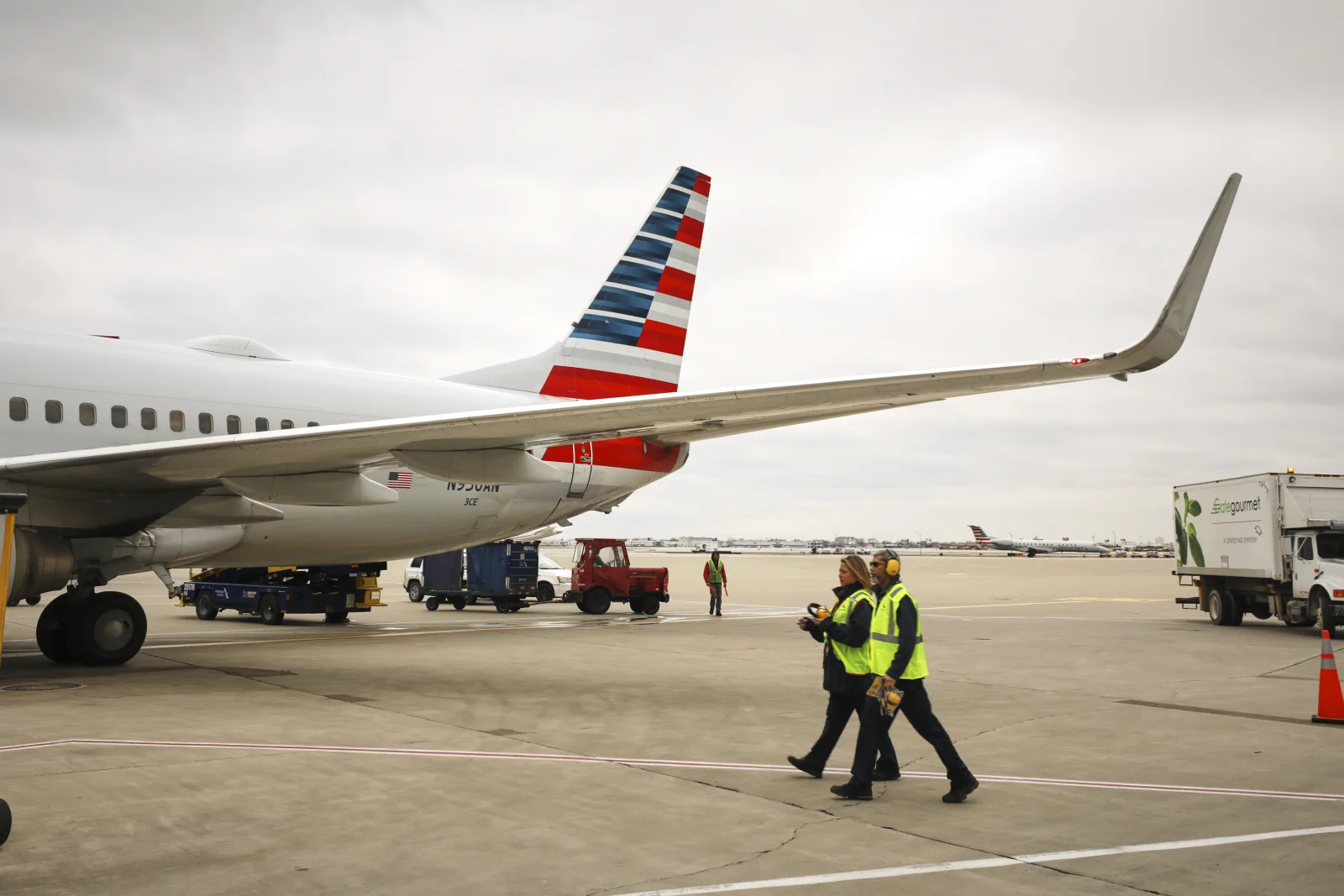
oneworld is strongest when you value quality over absolute network sprawl.
As of mid-2026, oneworld lists 15 full member airlines. Four of them, American, British Airways, Cathay Pacific, and Qantas, are founding members from the alliance launch on 1 February 1999. The two newest, Fiji Airways and Oman Air, both joined in 2025. The table below promotes the roster into something a planner can actually use, pairing each carrier with its primary hub and the region it anchors.
| Airline | Primary hub | Region anchored | Member since |
|---|---|---|---|
| Alaska Airlines | Seattle (SEA) | United States West Coast / Pacific Northwest | 2021 |
| American Airlines | Dallas Fort Worth (DFW) | United States | 1999 (founder) |
| British Airways | London Heathrow (LHR) | United Kingdom and transatlantic | 1999 (founder) |
| Cathay Pacific | Hong Kong (HKG) | Greater China and East Asia | 1999 (founder) |
| Fiji Airways | Nadi (NAN) | South Pacific | 2025 |
| Finnair | Helsinki (HEL) | Northern Europe | 1999 |
| Iberia | Madrid (MAD) | Spain, Southern Europe and Latin America | 1999 |
| Japan Airlines | Tokyo (HND / NRT) | Japan and North Asia | 2007 |
| Malaysia Airlines | Kuala Lumpur (KUL) | Southeast Asia | 2013 |
| Oman Air | Muscat (MCT) | Arabian Gulf and Indian Ocean | 2025 |
| Qantas | Sydney (SYD) | Australia and the South Pacific | 1999 (founder) |
| Qatar Airways | Doha (DOH) | Arabian Gulf and global connections | 2013 |
| Royal Air Maroc | Casablanca (CMN) | North and West Africa | 2020 |
| Royal Jordanian | Amman (AMM) | Middle East and the Levant | 2007 |
| SriLankan Airlines | Colombo (CMB) | South Asia and the Indian subcontinent | 2014 |
Two clarifications matter for anyone counting members. First, S7 Airlines remains suspended, a status that has held since April 2022, so any guide still counting S7 as a normal active member is outdated. Second, oneworld announced Philippine Airlines as a future member in June 2026, but it has not yet joined, which means the active full-member count is 15, not 16. The alliance says its network now serves more than 900 destinations across about 170 territories, a figure repeated in current oneworld membership communications.
The alliance has been unusually active for a network that often looks static. Four developments are worth flagging because they change how you should think about coverage.
No airline left oneworld in 2025 or 2026, which makes the alliance a more stable planning surface than it was during the turbulence of the early 2020s.
oneworld has three reciprocal alliance tiers: Ruby, Sapphire, and Emerald. These benefits sit on top of the status you hold with a member-airline frequent-flyer programme, and they are cumulative, so each higher tier keeps everything the tier below it gives you. The current oneworld benefits grid sets out the package as follows.
| Benefit | Ruby | Sapphire | Emerald |
|---|---|---|---|
| Business-class lounge access | No | Yes | Yes |
| First-class lounge access | No | No | Yes |
| Priority check-in | Business desk | Business desk | First desk |
| Priority boarding | No | Yes | Yes |
| Extra checked baggage | No | Plus 15 kg or one extra bag | Plus 20 kg or one extra bag |
| Priority baggage handling | No | Yes | Yes |
| Fast-track security | No | No | Select airports |
| Preferred or pre-reserved seating | Yes | Yes | Yes |
| Waitlist and standby priority | Yes | Yes | Yes |
Ruby is the entry point. It brings business-class priority check-in, preferred or pre-reserved seating where the operating airline allows it, and better priority on waitlists and standby. The honest caveat is that Ruby does not include lounge access, extra baggage, or priority boarding, so it is useful but not transformational.
Sapphire is where oneworld starts to feel powerful. It adds business-class lounge access, priority boarding, an extra checked-baggage allowance, and priority baggage handling on top of the Ruby benefits. For many travellers, Sapphire is the optimal tier because it delivers the airport experience improvements people actually notice on every trip.
Emerald is the premium tier. It adds access to first-class lounges regardless of the cabin you are flying, first-class priority check-in, fast-track or priority-lane security at select airports, and a larger extra-baggage allowance. For travellers who pass through major alliance hubs often, Emerald can materially reduce airport friction. At New York JFK Terminal 8, American's joint premium lounges page admits Emerald members of other oneworld programmes on any oneworld flight, plus one guest, to the Soho Lounge it runs with British Airways; American's own Executive Platinum and Platinum Pro members get in on qualifying international flights. The more exclusive Chelsea Lounge next door is reserved for ConciergeKey members and Flagship First or Flagship Business Plus passengers.
oneworld is explicit that every alliance benefit is delivered in accordance with the policy of the airline operating the flight, so the operating carrier can modify or override the alliance standard. Three exceptions catch travellers out most often. Priority baggage handling is not provided on British Airways operated flights. British Airways also gives no extra baggage allowance on hand-baggage-only fares. And members who earned their status through American AAdvantage or Alaska are not eligible for elite lounge access when travelling entirely within the United States, even though members who earned the same tier through another oneworld carrier keep it. The alliance gives the framework; the operating airline still controls the exact frontline experience.

All alliances promise seamlessness. oneworld's edge is that a high proportion of its key members are airlines people actively want to fly, not just airlines they tolerate for coverage.
Qatar Airways, Japan Airlines, Cathay Pacific, Finnair, Oman Air, and Qantas all matter because they combine strong hard product, respectable service reputations, and alliance utility. American and Alaska matter because they give the alliance North American relevance. British Airways and Iberia matter because they keep the transatlantic and European machine moving, even if their individual loyalty economics are not always beloved.
That mix creates a very workable alliance for premium-cabin travellers. You can earn with one programme, hold status in another, and still consume benefits across several airlines that are genuinely competitive on board.
This is the real question, and it is the one the alliance marketing never answers. oneworld itself is not a currency. Your choice of frequent-flyer programme determines how easy status is to earn, how much transfer access you have from flexible points, how painful surcharges become, and where the redemption sweet spots hide. Four programmes do most of the heavy lifting.
American remains one of the most strategically important oneworld programmes because it uses Loyalty Points rather than pure flown miles as the status framework. That makes it adaptable for travellers whose earning mix includes co-branded cards and partners rather than just paid flights. For 2026 the published status thresholds are 40,000 Loyalty Points for Gold, 75,000 for Platinum, 125,000 for Platinum Pro, and 200,000 for Executive Platinum. We cover the tier ladder in depth in the complete AAdvantage guide. On the redemption side, American's biggest strength is a partner award chart that has stayed broadly stable for years: Qatar Qsuites business class runs roughly 60,000 to 70,000 miles one-way from the United States, and Japan Airlines first class sits near 80,000 miles, both standout values against cash fares.
Alaska is compelling for travellers who can use its network or its West Coast positioning, and it punches far above its weight on redemptions. Alaska Mileage Plan kept its generous partner sweet spots, including the celebrated Cathay Pacific first-class redemption from the United States to Hong Kong at 70,000 miles one-way, against a cash fare that often exceeds 20,000 US dollars. Alaska has also removed its old single-partner award rule, so you can now combine several oneworld carriers on a single award ticket, and the programme is folding into the combined Atmos Rewards scheme with Hawaiian, which keeps oneworld access intact while adding milestone rewards.
The Avios ecosystem spans the British Airways Club, Iberia Plus, Finnair Plus, and Qatar Airways Privilege Club, plus Aer Lingus AerClub and Vueling. Avios move 1 to 1 at the same value across all of them, so the real skill is shifting your balance to whichever programme prices a given redemption cheapest. Since autumn 2025 the transfer process has been rebuilt on avios.com as Move Avios, with permanent account links and direct programme-to-programme moves, although Qatar and Finnair still route through the British Airways Club as a two-step conduit. Avios is strongest for short-haul redemptions, household and family pooling, and intra-Europe usage. It is weakest when travellers force it onto long-haul itineraries without pricing the surcharge side honestly.
Cathay Pacific's Asia Miles remains the natural hold for Hong Kong centred travellers and for readers who value multi-carrier planning. It is not the easiest programme for every beginner, and it devalued its award chart again on 1 May 2026, with long-haul premium-cabin redemptions rising materially and the American Express Membership Rewards transfer ratio cut from 1 to 1 down to 5 to 4. Even so, it fits complex, premium, Asia-facing travel better than many mainstream readers assume, and it supports one of the better multi-carrier award charts for round-the-world style itineraries. We compare it head to head with the other major Asia-Pacific currencies in the KrisFlyer vs Asia Miles vs Avios breakdown.
| Traveller profile | Best programme to hold | Why |
|---|---|---|
| United States based, card-heavy earner | American AAdvantage | Loyalty Points status from spend and partners, stable partner award chart |
| United States West Coast, premium redemptions | Alaska Mileage Plan | Cathay First sweet spot, free stopovers, multi-carrier awards |
| Europe based, short-haul and household | Avios family | Cheap short-haul, 1 to 1 family transferability, pooling |
| Hong Kong or Asia based, multi-carrier | Cathay Asia Miles | Network fit, multi-carrier award chart, regional depth |
The alliance does not have one redemption philosophy, and that is exactly why generic oneworld advice is often unhelpful. When travellers say they want to redeem on oneworld, what they really mean is that they want access to the oneworld network while paying with the most favourable member programme for that itinerary. The alliance gives you the inventory relationship; the programme you choose determines whether the price is elegant or painful.
oneworld redemptions evolve constantly, but a handful of patterns have stayed durable enough to plan around. Treat the figures below as live indicative pricing rather than fixed promises, and confirm availability in the relevant programme before transferring any flexible points.
oneworld remains culturally linked to round-the-world travel, but the mechanics are widely misunderstood. The oneworld Explorer is a cash revenue fare, priced by the number of continents you visit rather than by distance. You choose between three and six continents, take between three and 16 flights, cross both the Atlantic and the Pacific, and travel within a window of 10 days to a year. Indicative economy pricing in 2026 starts around 3,600 US dollars for three continents and rises with each continent added and with the cabin you book, before taxes. The sister product, the Global Explorer, is distance-based instead. Both are paid fares on which you still earn miles, and you should confirm current pricing on oneworld.com before planning.
This is the correction every current guide should make plainly. oneworld as an alliance has never offered a free round-the-world award, and you cannot pay for a oneworld Explorer fare with points. If you want a round-the-world itinerary on miles, you build it through an individual member programme's multi-carrier award chart. The Qantas oneworld Classic Flight Reward is the cleanest example, starting from about 152,200 points in economy, and British Airways, Cathay Asia Miles, and Japan Airlines all publish their own multi-carrier oneworld charts. The smart lesson in 2026 is not to memorise a static table from a blog post, but to understand which programme family is worth checking first for your own geography.
oneworld in 2026 is best understood as a quality-first alliance with a current 15-airline roster, more than 900 destinations across about 170 territories, and a frequent-flyer ecosystem that rewards strategic programme choice more than blind loyalty. Its value is not just in the airlines you can fly. It is in the ability to decide which programme you want to earn with, which benefits you want to hold, and which alliance members you most want to consume.
If you want one simple takeaway, make it this: hold the right programme for your geography, aim for Sapphire unless you know why you need Emerald, and stop using old alliance maps. oneworld is better in 2026 than many stale guides make it look.
Programme rules verified against the official sources below. External sites open in a new tab.
See your requalification forecast in under a minute. No account, and never a loyalty password.
Forecast my status, free →Share
Last reviewed: · How we research and update
Star Alliance in 2026: the 26-airline roster, falling to 25 when Asiana leaves in December, Gold benefits, and the best programmes to hold.
Read article →SkyTeam in 2026: the live member roster, Elite and Elite Plus benefits, where Flying Blue and Delta fit, and how to use the alliance effect…
Read article →American AAdvantage in 2026: Loyalty Points, status thresholds, Loyalty Point Rewards, systemwide upgrades, and where the programme still s…
Read article →A 2026 comparison of KrisFlyer, Asia Miles, and Avios: expiry rules, redemption strengths, transfer access, and which programme fits which …
Read article →